Andes
Incorporating microorganisms in agricultural fields to remove CO2
 USAMicrobial Carbon Mineralisation (MCM)Counts towards net neutralityBuyer Protection Carbon Removal


Bought by

Andes

Developed by


#50,000
Acres of farmland across the US MidwestCarbon Negative Shot winner with LLNL and DOE


AWS Clean Energy Accelerator 3.0 winner
Andes' microorganism technology integrates seamlessly with existing farming practices, transforming agricultural fields into effective systems for carbon dioxide removal while continuing to produce food.
This easy-to-adopt, low-cost technology enables gigatonne-scale carbon removal within a matter of a few years.
Mineral benefits include improved water drainage, enhanced nutrient content in the soil, and reduced risk of plant diseases. Furthermore, minerals stabilise soil organic matter, promoting the health of soils, plants, and the communities that rely on agriculture.
This easy-to-adopt, low-cost technology enables gigatonne-scale carbon removal within a matter of a few years.
Mineral benefits include improved water drainage, enhanced nutrient content in the soil, and reduced risk of plant diseases. Furthermore, minerals stabilise soil organic matter, promoting the health of soils, plants, and the communities that rely on agriculture.
Loading map...
What is Microbial Carbon Mineralisation?
The Microbial Carbon Mineralisation Methodology (MCM) is an innovative approach that leverages microorganisms to boost soil inorganic carbon levels. Similar to the effects seen with Regenerative Agriculture, increased soil biodiversity fosters more natural processes, enhancing carbon uptake. This methodology involves applying a microbial inoculant—composed of beneficial microorganisms—to agricultural fields, which supports seedling establishment and crop performance on marginal land by promoting plant growth and controlling soil-borne pathogens. Developed in line with the latest scientific findings, projects aiming to issue MCM credits must undergo independent validation in accordance with ISO 14064-3:2019 standards.

Research
Microbial Carbon Mineralization (MCM) - Carbon Dioxide Removal Pathway
Methodology for Quantification and Crediting of Carbon Dioxide RemovalAndes Releases World’s First Microbial Carbon Mineralization Methodology
Carbon removal company Andes has just released the world’s first Microbial Carbon Mineralization (MCM) methodology.Project Certifications and Claims

Verra
The project is listed on the Verified Carbon Standard (VCS) registry for Methodology VM0021 (project number: 3013).
Learn more
Sustainability Integrity Index
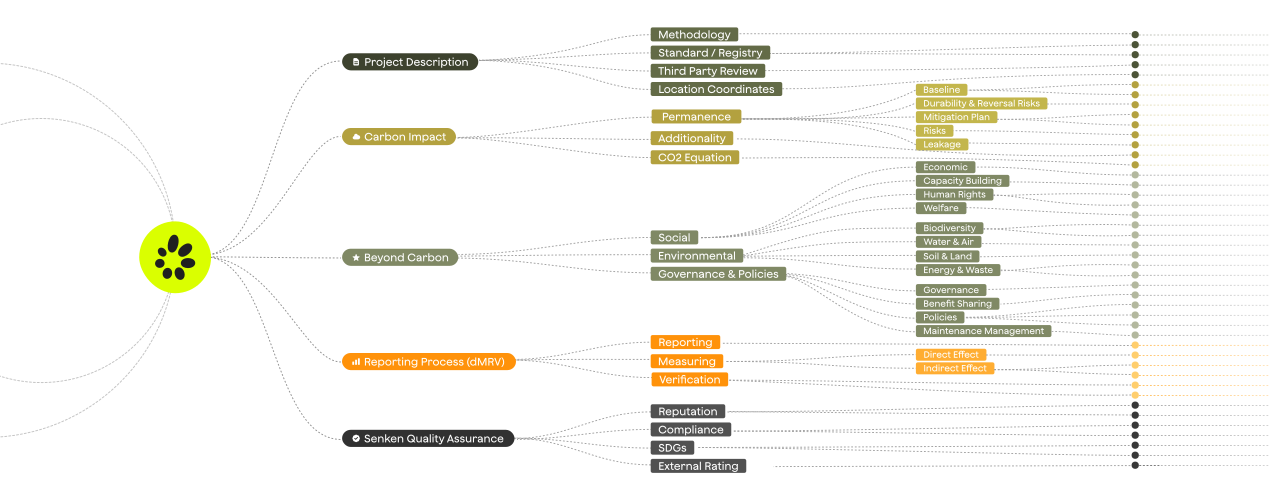
Senken uses 600+ datapoint Sustainability Integrity Index (SII) to select and onboard project developers. Only 5% of the projects we assess score high enough to make it into customer portfolios.
Socioeconomic Impact


By participating in the program, farmers receive a cash payment that can increase their net income by up to 30%, which is incredibly impactful in the communities where Andes operates, many of which are “disadvantaged” according to the US’ Climate and Economic Justice Screening Tool. Expansion into geographies outside of the US will allow Andes carbon program to further reach low-income farmers in South America and Africa.
Environmental Impact
The generation of minerals in agricultural fields with Andes technology can have positive effects on soil and plant health. Benefits of minerals include improved water drainage, higher nutrient content in the soil, and decreased likelihood of plant diseases. Additionally, minerals can stabilise soil organic matter, benefiting the overall health of soil, plants, and communities that depend on agricultural systems. <br><br>
Andes has demonstrated carbon dioxide removal in the lab, mesocosm columns, growth chamber, greenhouse, and field conditions.<br><br>


Senken's Take
In recent decades, conventional agriculture has experienced a chemical revolution, enabling crops to achieve higher yields across a wide range of soil types. Yet this dependence on chemical fertilisers has also caused substantial soil degradation, as these products often affect not only harmful but also beneficial microorganisms, ultimately compromising soil health in the pursuit of productivity.
Current unsustainable agricultural practices have resulted in an estimated one-third of the world’s soils becoming degraded, with 24 billion tons of fertile soil lost each year. Andes is addressing these challenges with an innovative methodology that harnesses the natural processes performed by soil microorganisms, enhancing both carbon uptake and storage capacity while restoring soil productivity. Andes’ Scientific Advisory Board, composed of distinguished scientists, offers critical advice and insights, guiding the development of this breakthrough technology.
Current unsustainable agricultural practices have resulted in an estimated one-third of the world’s soils becoming degraded, with 24 billion tons of fertile soil lost each year. Andes is addressing these challenges with an innovative methodology that harnesses the natural processes performed by soil microorganisms, enhancing both carbon uptake and storage capacity while restoring soil productivity. Andes’ Scientific Advisory Board, composed of distinguished scientists, offers critical advice and insights, guiding the development of this breakthrough technology.
Groundbreaking methodology harnessing technology combined with natural processes
Strong co-benefits for local farming communities
We believe that this project would be a great addition to your portfolio.
Enter your details and our team will be in touch about next steps.
Send us an enquiry


Connect with our expert team


Create your carbon portfolio

Purchase for now or the future
